Category Archives: Archive

Wellness health insurance premium discount incentive reminder

Have you completed your annual physical since last December? If you are on Drake’s health plan, don’t forget to take a copy of the Premium Discount – Annual Physical Form to your appointment. This form can be found on myDrake in the Human Resources Employee Wellness section. 

Those on Drake’s health plan who complete a physical with their PCP between Dec. 1, 2021 and Nov. 30, 2022 and submit a Premium Discount – Annual Physical Form by Dec. 2, 2022, will receive the wellness health insurance premium discount in 2023, which is a savings of approximately $30 per month.    

Besides receiving a premium discount, an annual physical is a great way to receive important health information through age and gender specific examinations, schedule recommended preventative screenings, and create a doctor-patient relationship.

If you have not scheduled your annual physical yet with your PCP, you are encouraged to do so as soon as possible.

Please contact linda.feiden@drake.edu with questions. 

— Linda Feiden, Human Resources

Time to play HealthyU BINGO

Join us in July for HealthyU BINGO. The goal is to fill up a blank BINGO card (or two), during the month, with healthy activities completed from a provided list.Then, in August, we will get together to play games of HealthyU BINGO for prizes.  

You are welcome to fill out the HealthyU BINGO card without playing the BINGO games, but who doesn’t like playing BINGO! 

To get started, send an email to linda.feiden@drake.edu. Deadline to register is Thursday, June 30.  All participants will receive an email with an attached packet that includes directions, a list of HealthyU BINGO activities, and a blank BINGO card.  You are welcome to make multiple copies of this card.   

Please feel free to reach out with questions. This is a great event for the whole family!   

— Linda Feiden, Human Resources

Share your BUILD ideas

This past academic year, 488 faculty and staff attended Bulldogs United in Learning Drake (BUILD) classes.  These classes assist individuals with learning new skills, improving their well-being, and strengthening professional knowledge.

We are now in the process of planning for our 2022–2023 academic year.  If there are topics you would like to see addressed in BUILD sessions this fall, or next spring, please let us know.  If you have general suggestions for growing or improving the BUILD experience, we’d like to hear those too. And if you would like to present a BUILD session, we would love to hear from you!

Please send an email to linda.feiden@drake.edu with your ideas and suggestions.

Linda Feiden, Human Resources

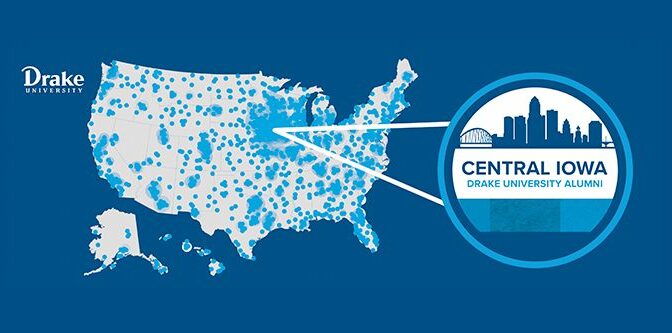
Central Iowa Alumni social and serve – Iowa Juneteenth

Join Central Iowa Alumni for a social mixer at Rico’s at Drake ahead of Juneteenth on Tuesday, June 14, at 5:30 p.m. Folks are encouraged to donate books from an approved registry of BIPOC written and focused children’s books to be provided to children at Iowa Juneteenth’s Neighbors Day the following Saturday. Books can also be delivered directly via the Amazon registry. View the registry. Heavy hors d’oeuvres will be served.

Anyone is welcome to attend, regardless of their affiliation to Drake. Register.

— Courtney Conrad, Alumni Relations

Panopto planned outage June 25

On Saturday, June 25, the Panopto Cloud will be updated with the latest features and improvements. As a result, Panopto will be unavailable from 8 p.m. to 11 p.m. Saturday evening.

During the downtime, you will be unable to access videos on your Panopto site and any attempts to upload videos will result in a “Server unable to connect” error message.

We appreciate your patience. If you are unable to access Panopto after the planned maintenance window, please contact the support center at 515–271–3001 or visit service.drake.edu/its to report your issue.

James McNab, ITS

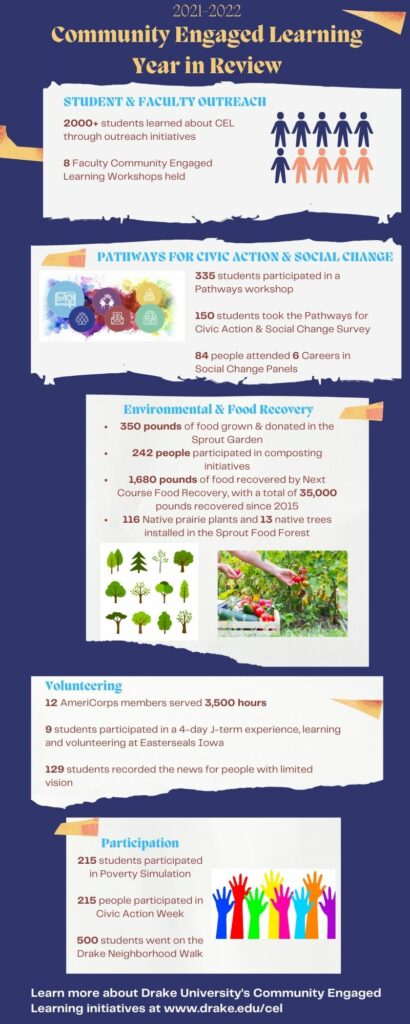
Community Engaged Learning year in review

The Office of Community Engaged Learning celebrates the collective work of the Drake campus and community over the past year. Students, faculty, staff, and community members worked together to learn, grow, and act. Volunteers recovered nearly 1,700 pounds of food that was delivered to local organizations and pantries; prairie plants and native trees were planted in the new Sprout Garden & Food Forest space, along with 350 pounds of food grown and donated; and 12 AmeriCorps members served more than 3,500 hours of service to the local community. And much more!

To learn more about community engaged learning initiatives at Drake and to get involved, visit www.drake.edu/cel or contact servicelearning@drake.edu.

— Amanda Martin, Community Engaged Learning

Information security is everyone’s job

Last fall, Howard University made headlines as the victim of a ransomware attack that forced the cancellation of online and in-person classes. The Washington, DC, institution is not the only university to be impacted by cybercriminals. With vast repositories of sensitive and personal data from students, faculty and staff, colleges and universities are a prime target for attack.

One of the most common attack vectors for ransomware is phishing, which has been around for decades. Phishing is a social engineering technique that uses email to entice or trick unsuspecting people to click on web links or attachments that appear to be legitimate but are instead designed to compromise the recipient’s machine or trick the recipient into revealing credentials or other sensitive information. Phishing presents adversaries with a low-risk method that offers a high potential for financial gain.

Phishing is challenging to fight with technology alone. Many email security solutions still allow up to 20% of phishing emails to be delivered.  Also, anti-phishing technology usually won’t stop email from a compromised University email account because the messages are being sent from a legitimate source. As a result, stopping phishing threats requires vigilance by everyone. People must learn to recognize the signs of a phishing attempt and report these attempts to the proper security staff.

Here are five signs of a phishing attempt

  • An unexpected email that prompts you to change a password, send funds, open an attachment, or log into a website.
  • An email whose body appears to be legitimate but was sent from the wrong domain (e.g., an email that says it is from your bank but was sent from a Gmail account).
  • An email with misspelled words, bad grammar, or poor formatting.
  • An email that contains suspicious file attachments.
  • An email containing web links that are from fake or unknown web domains when the cursor is hovered over them.

To help us all recognize phishing emails, ITS will continue to simulate phishing and assign training to those most susceptible. If you believe you’ve been targeted by phishing, see Reporting a Phishing Message (How-to).

— Chris Mielke, ITS

Wrapping up Mental Health Awareness Month: Let’s talk

As we reflect on the COVID-19 pandemic, there are some surprising silver linings. Employers are finding ways to be more flexible with where, when, and how work is performed. There are suddenly more obvious and easy ways to accommodate employees with disabilities. In many ways, we are finding it easier to empathize and give others space to be human. This is all great—drawing positives from this difficult chapter is important and meaningful.

One of the additional pandemic silver linings is that more and more people are talking about mental health—stress, anxiety, depression, grief. And this is great! The more open people are the less stigma attaches. However, mental health conditions, resources, and conversations can still feel, well, complicated.

It is important to recognize that there is often no one single cause for a mental health condition. Instead, there are many possible risk factors that can influence how likely a person is to experience a mental health condition or how serious the symptoms may be.

Some risk factors for mental health conditions include trauma, which can be a one-time event or ongoing; your environment and how it impacts your health and quality of life (also known as social determinants of health, like financial stability and access to health care); genetics; brain chemistry; and your personal habits and lifestyle, such as a lack of sleep.

Naturally, understanding the risk factors for a mental health condition can be more difficult when it’s your own mental health. Take time to ask yourself about your thoughts, feelings, and behaviors to see if this is part of a pattern that may be caused by a mental health condition. Here are some questions to get you started:

  • Have things that used to feel easy started feeling difficult?
  • Does the idea of doing daily tasks like making your bed now feel really, really hard?
  • Have you lost interest in activities and hobbies you used to enjoy?
  • Do you feel irritated, possibly to the point of lashing out at people you care about?

Our society focuses much more on physical health than mental health, but both are equally important. If you are concerned about your mental health, there are several options available. We wrote about mental health care options through Broadlawns and our EAP on May 3. We offered some self-care tips on May 10.

Another free resource to check out is a page hosted by Mental Health America featuring a range of screening tools you can take (with two offered in Spanish). I completed one of the screening tools and it only took a quick minute. The results do not constitute a diagnosis but are helpful. They include some possible “next steps” and a variety of related “Info & Resources.”

Take time to assess your mental health and to take care of you!

— Maureen De Armond, Human Resources

Law School announces 2022 Faculty Award winners

Drake Law School recognized two outstanding faculty members for their contributions to the Law School’s teaching, scholarship, and research during the 2021–2022 academic year.

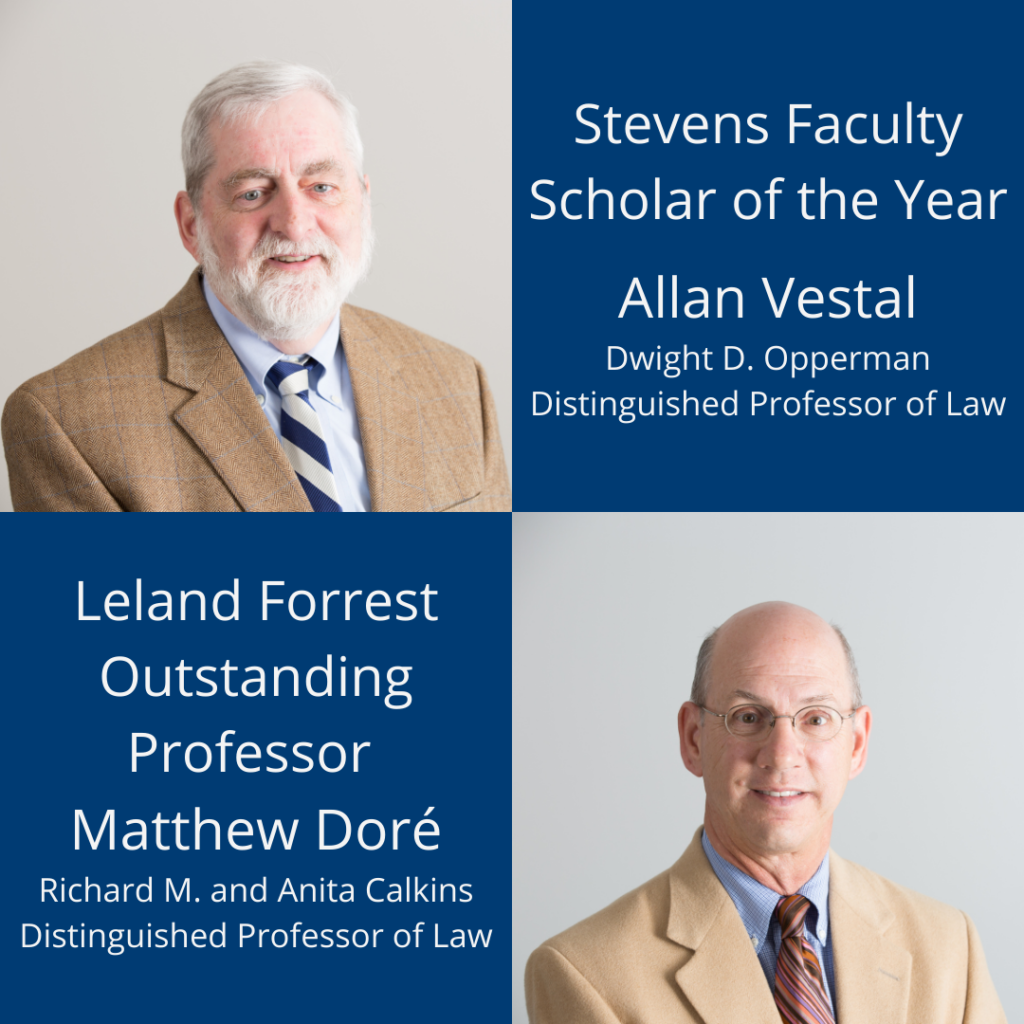
Allan Vestal, Dwight D. Opperman Distinguished Professor of Law, was recognized as the 2022 Stevens Faculty Scholar of the Year. The Stevens Faculty Scholar of the Year award honors the faculty member who made the most significant contribution to academic scholarship during the previous year. Professor Vestal published seven articles in the last three years on topics ranging from religious freedom to legal history. In addition, he completed an innovative new course book for Contract Drafting that promises to see wide adoption nationwide.

Matt Doré, Richard M. and Anita Calkins Distinguished Professor of Law, received the Student Bar Association’s (SBA) Leland Forrest Outstanding Professor Award. The Outstanding Professor award recognizes a faculty member for their contributions to the quality of legal education both in and out of the classroom. The recipient is chosen by vote of the third-year students and will lead the class in the graduation procession in May. Students selected Professor Doré for his extensive knowledge, passion for the subject matter, and willingness to go above and beyond to serve students and the Drake Law community. He has served on many crucial faculty committees including the promotion and tenure, and admission committees. He has coached Drake’s Client Counseling Team for 30 years, advancing to the national finals several times. “But most importantly,” noted Riley Noble, 2021-2022 SBA president, “Professor Doré is always there for his students. He is careful to make sure they are supported and that they always have the resources they need to succeed.”

Award winners were announced during the Drake Law Supreme Court Celebration in April. For a list of previous faculty award winners and this year’s Supreme Court Celebration student award winners, visit the Supreme Court Celebration website.

— Theresa Howard, Law School